
The Ultimate Guide to Choosing a Reliable Wholesale Hair Factory
In the competitive and lucrative hair industry, the quality of your product is the cornerstone of your brand. For salon owners, distributors, and hair entrepreneurs, the success of your business hinges on one critical decision: choosing the right **wholesale hair factory**. A reliable partner ensures consistent quality, ethical sourcing, and a stable supply chain, allowing you to build a reputable brand and loyal customer base. Conversely, a poor choice can lead to inconsistent products, damaged reputation, and significant financial loss. This guide provides a comprehensive roadmap for navigating the complexities of sourcing **wholesale hair**, helping you identify and secure a partnership that will fuel your business’s growth and success.
Why Your Choice of Wholesale Hair Factory is a Business-Critical Decision
Selecting a supplier is more than a simple transaction; it’s a strategic partnership. The factory you choose directly impacts every facet of your business, from the product you sell to the profits you generate.
Impact on Product Quality and Brand Reputation
Your brand’s reputation is built on the quality of the hair you provide. A top-tier **wholesale hair factory** will implement rigorous quality control measures, ensuring that every bundle of hair is consistent in texture, length, and color. They will provide genuine, ethically sourced human hair that is free from excessive tangling, shedding, and chemical damage. This commitment to quality translates directly to customer satisfaction, positive reviews, and the premium brand image you want to cultivate. Sourcing high-quality #hairextension products is non-negotiable for long-term success.
Influence on Profit Margins and Scalability
While it might be tempting to opt for the cheapest supplier, this often leads to higher long-term costs due to returns, complaints, and lost customers. A reliable **wholesale hair factory** offers competitive pricing for high-quality products, protecting your profit margins. Furthermore, as your business grows, you need a partner who can scale with you. A dependable factory will have the production capacity to handle larger orders without compromising on quality or delivery times, ensuring your supply chain remains robust as you expand.
The Cost of a Bad Partnership
Aligning with a subpar supplier can be catastrophic. The risks include receiving silicone-coated, mixed-synthetic, or unethically sourced hair that will quickly deteriorate. This leads to unhappy customers, chargebacks, and irreversible damage to your brand’s credibility. A bad partnership wastes time, money, and erodes the trust you’ve worked so hard to build.
Key Criteria for Evaluating a Wholesale Hair Factory
To make an informed decision, you must conduct thorough due diligence. Focus your evaluation on a few core pillars that define a trustworthy and professional **wholesale hair** supplier.
1. Hair Sourcing and Ethical Practices
The origin of the hair is the most crucial factor. A transparent factory will be open about where and how they source their raw materials.
- Hair Type: Clarify if they supply 100% Virgin Remy hair (cuticles intact and aligned), Remy hair, or non-Remy hair. For a premium brand, Virgin Remy is the gold standard. [Learn more about the differences between Virgin and Remy hair here].
- Ethical Sourcing: Inquire about their sourcing methods. Reputable factories often source from temples or willing donors who are fairly compensated. Avoid suppliers who are vague or evasive about the hair’s origin.
- Authenticity: Ensure the factory guarantees the hair is 100% human hair and not mixed with animal or synthetic fibers.
2. Manufacturing Processes and Quality Control
A factory’s internal processes reveal its commitment to quality. Look for a supplier who has a systematic approach to production.
- Chemical Processing: Ask about their process for cleaning, conditioning, and coloring the hair. Minimal, gentle processing is ideal for maintaining the hair’s integrity. Over-processed hair is prone to damage and dryness.
- Weft Construction: For wefted hair, examine the construction. Double-wefted, machine-tied wefts are standard for minimizing shedding. The stitching should be neat, tight, and secure.
- Quality Control Checks: A professional **wholesale hair factory** will have multiple quality checkpoints, from raw material inspection to final product packaging. They should be able to describe their QC process in detail.
3. Product Range and Customization Options
Your business needs a supplier who can meet diverse customer demands. This includes catering to international clients, whether they’re looking for #extensionesdecabello in Latin America or #przedluzaniewlosow in Europe.
- Variety: Does the factory offer a wide range of textures (straight, wavy, curly), colors, and lengths?
- Extension Types: Can they produce various types of extensions, such as tape-ins, I-tips, clip-ins, and wefts?
- Customization: A great partner can accommodate custom orders for specific colors, textures, or private labeling, allowing you to create a unique product line. [Explore our full range of wholesale hair products].
4. Communication and Customer Support
Clear, professional, and timely communication is vital, especially when dealing with international suppliers.
- Responsiveness: How quickly and thoroughly do they respond to your inquiries?
- Language: Is there a language barrier? A dedicated sales representative who is fluent in your language is a significant advantage.
- Problem Resolution: Ask about their policies for handling incorrect orders or quality issues. A reliable partner will stand behind their product and work with you to resolve any problems.
The Vetting Process: A Step-by-Step Guide to Finding Your Partner
Once you understand the criteria, it’s time to put them into practice. Follow this systematic approach to filter potential suppliers and identify the best **wholesale hair factory** for your business.
Step 1: Initial Research and Creating a Shortlist
Begin by searching online for suppliers. Use specific terms like “**wholesale hair factory in Vietnam**” or “**Indian raw hair wholesale**”. Look for factories with professional websites, clear product information, and business credentials. Attend industry trade shows to meet suppliers in person and examine their products firsthand. Ask for referrals from other professionals in the industry.
Step 2: Requesting Samples and Performing Tests
Never place a large order without first testing the product. Order a sample pack that includes different textures. Once you receive the samples, perform these essential tests:
- The Wash Test: Wash and condition the hair several times. Does it become tangled, matted, or excessively dry? High-quality **wholesale hair** will remain soft and manageable.
- The Shedding Test: Run your fingers through the hair and brush it. Minimal shedding is normal, but excessive shedding is a major red flag.
- The Burn Test: Carefully burn a few strands of hair. Real human hair will singe, turn to ash, and smell like burnt hair. Synthetic fibers will melt into a plastic ball and produce a chemical smell.
- The Color Test: If you plan to color the hair, try lifting or depositing color on a sample. True virgin hair should lift evenly.
Step 3: Verifying Credentials and Reading Reviews
Do your homework on the factories on your shortlist. Look for business licenses, export permits, and any relevant certifications. Search for independent reviews on platforms outside of their own website, such as B2B forums or social media groups. Be cautious of factories that only have perfect, generic reviews.
Step 4: Discussing Pricing, MOQs, and Shipping
Once you are confident in the quality, engage in a business discussion.
- Pricing: Get a clear price list. Understand if prices are tiered based on volume.
- Minimum Order Quantity (MOQ): What is the smallest order you can place? A reasonable MOQ allows you to manage inventory effectively as you start.
- Payment Terms: What are the accepted payment methods and terms?
- Shipping and Lead Times: Clarify shipping costs, carriers used, and the estimated production and delivery time for your orders.
Red Flags to Watch Out For When Sourcing Wholesale Hair
During your search, be vigilant for warning signs that may indicate an unreliable or dishonest supplier.
- Prices That Are Too Good to Be True: Extremely low prices often correlate with low-quality, mixed, or unethically sourced hair. Quality human hair is a valuable commodity, and its price reflects that.
- Lack of Transparency: If a supplier is unwilling to share videos of their factory, discuss their sourcing methods, or provide detailed product information, proceed with caution.
- Poor Communication: Unprofessional emails, slow response times, or an unwillingness to answer your questions thoroughly are all red flags.
- Inconsistent Sample Quality: If a factory sends you a beautiful sample but your first small order is of a lower quality, it’s a classic “bait-and-switch” tactic. This is why starting with a small, manageable order after the sample is crucial.
Conclusion: Building a Foundation for Success
Choosing the right **wholesale hair factory** is arguably the most important business decision you will make as a hair entrepreneur. It requires patience, research, and a commitment to due diligence. By focusing on the core criteria of ethical sourcing, manufacturing quality, product range, and professional communication, you can filter out subpar suppliers and identify a true partner. This partnership is the foundation upon which you can build a thriving, reputable brand that delivers exceptional value to your customers and secures your long-term success in the dynamic hair industry.
Actionable Takeaways
- Always Order a Sample First: Never commit to a large inventory purchase without first ordering, testing, and verifying the quality of a sample pack from a potential **wholesale hair** supplier.
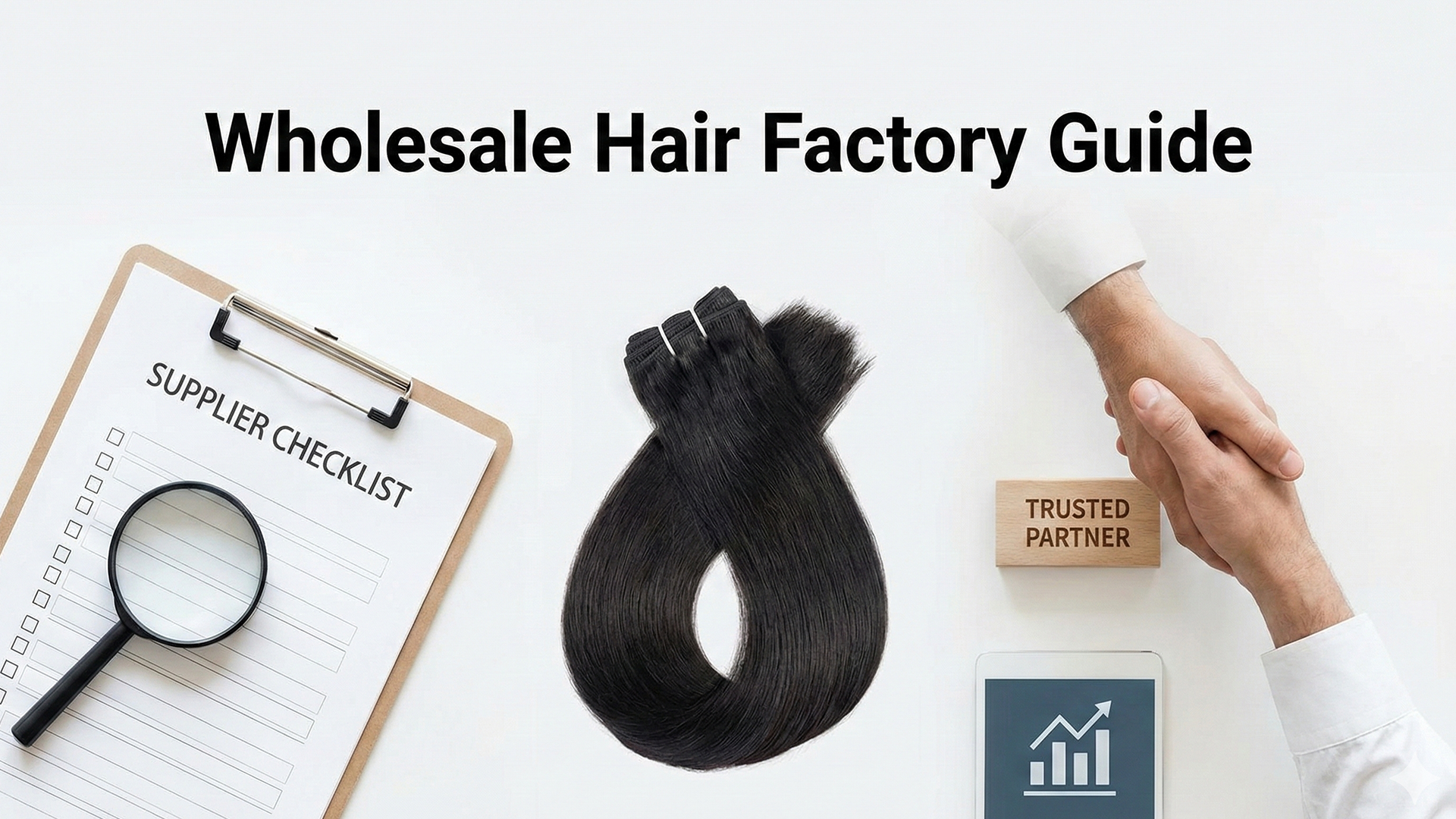
- Create a Supplier Vetting Checklist: Use the criteria in this guide (sourcing, quality control, communication, etc.) to create a standardized checklist to objectively compare and score each potential **wholesale hair factory**.